

Cash Stuffing for Beginners
Tap, tap, tap — card spending barely feels like spending at all. Then the statement arrives and the money is simply… gone. Cash stuffing exists to fix exactly that feeling. It’s the envelope budgeting method our grandparents used, now all over social media for one reason: when the cash in an envelope runs out, you can see it, touch it, and — this is the point — you actually stop.
This beginner’s guide covers what cash stuffing is, the exact steps to start on your next payday, a worked example, and the mistakes that make people quit in month one.
What Cash Stuffing Is (and Isn’t)
You withdraw cash for your flexible spending categories, divide it into labeled envelopes — groceries, eating out, fun, personal — and spend only from each envelope until the next payday. Bills like rent, utilities and loan payments stay digital and automatic; cash is only for the spending that tends to leak.
Why it works is almost embarrassingly simple: handing over physical money registers in a way tapping a card never does, and an empty envelope is a hard limit no app notification can match.
What You Need to Start
- Envelopes or a cash binder — plain paper envelopes work fine for your first month; upgrade later only if you stick with it.
- A marker and labels — one envelope per category.
- Your budget numbers — you can’t stuff envelopes with amounts you haven’t decided. If you don’t have a budget yet, start with our beginner budget guide; it takes about an hour. (Our 50/30/20 Budget Calculator can split your income into needs, wants and savings in a minute.)
- A safe spot at home — you will not carry a month of cash in your wallet (more on that below).
The 5 Steps, Payday to Payday
Step 1 — Pick your cash categories. Only variable spending goes in envelopes: groceries, eating out, gas, fun money, personal care, household bits. Start with 4–6 categories. Best for beginners: groceries, eating out, fun, personal — the four biggest leak sources.
Step 2 — Set each amount from last month’s reality. Look at what you actually spent (statements, not guesses) and trim slightly — say 10%. Amounts set from fantasy fail by week two.
Step 3 — Withdraw and stuff on payday. Take out the total in cash, ideally in mixed bills, and divide it into envelopes the same day. This little ritual — money in hand, envelopes filled — is the heart of the system.
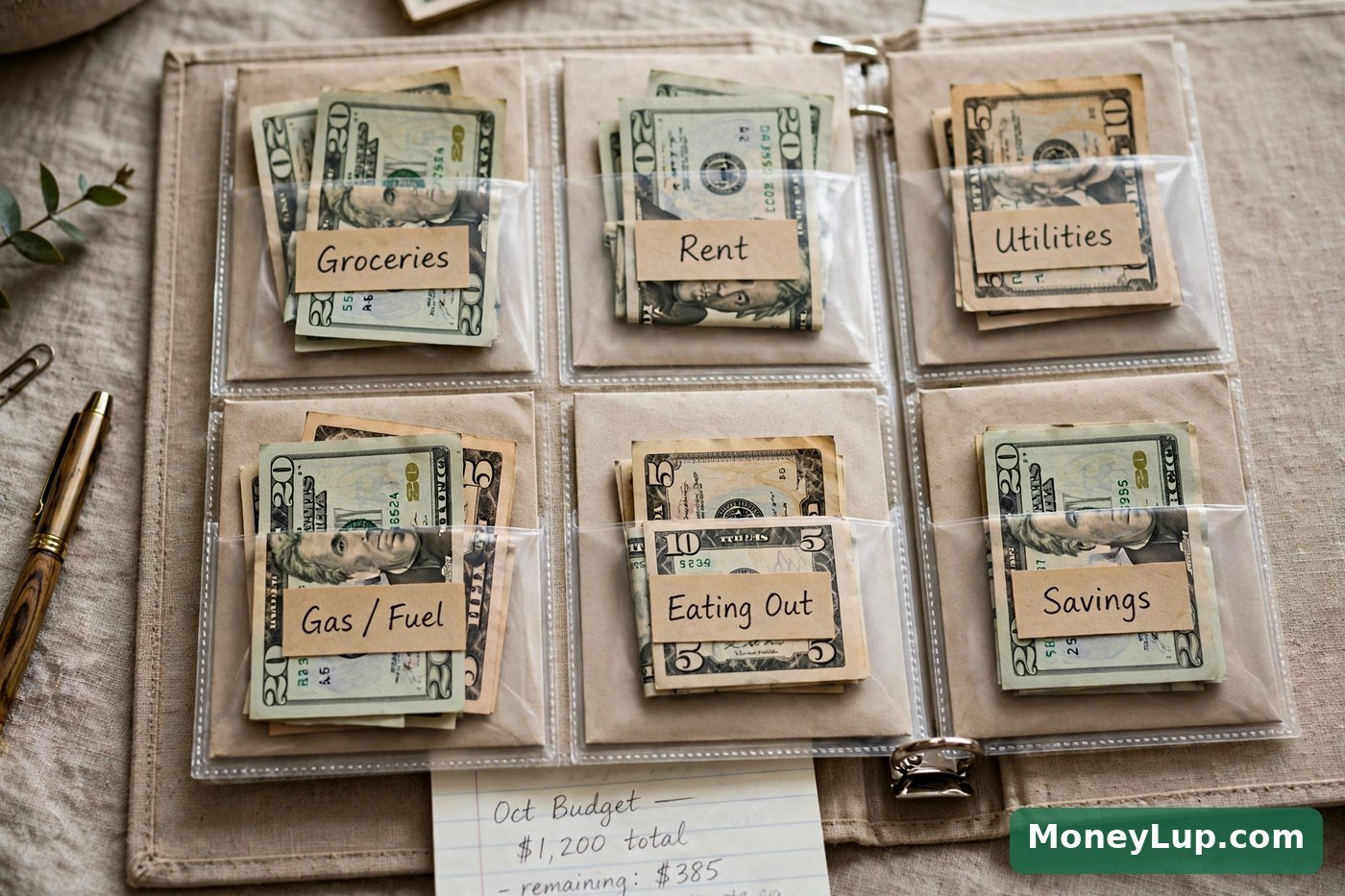
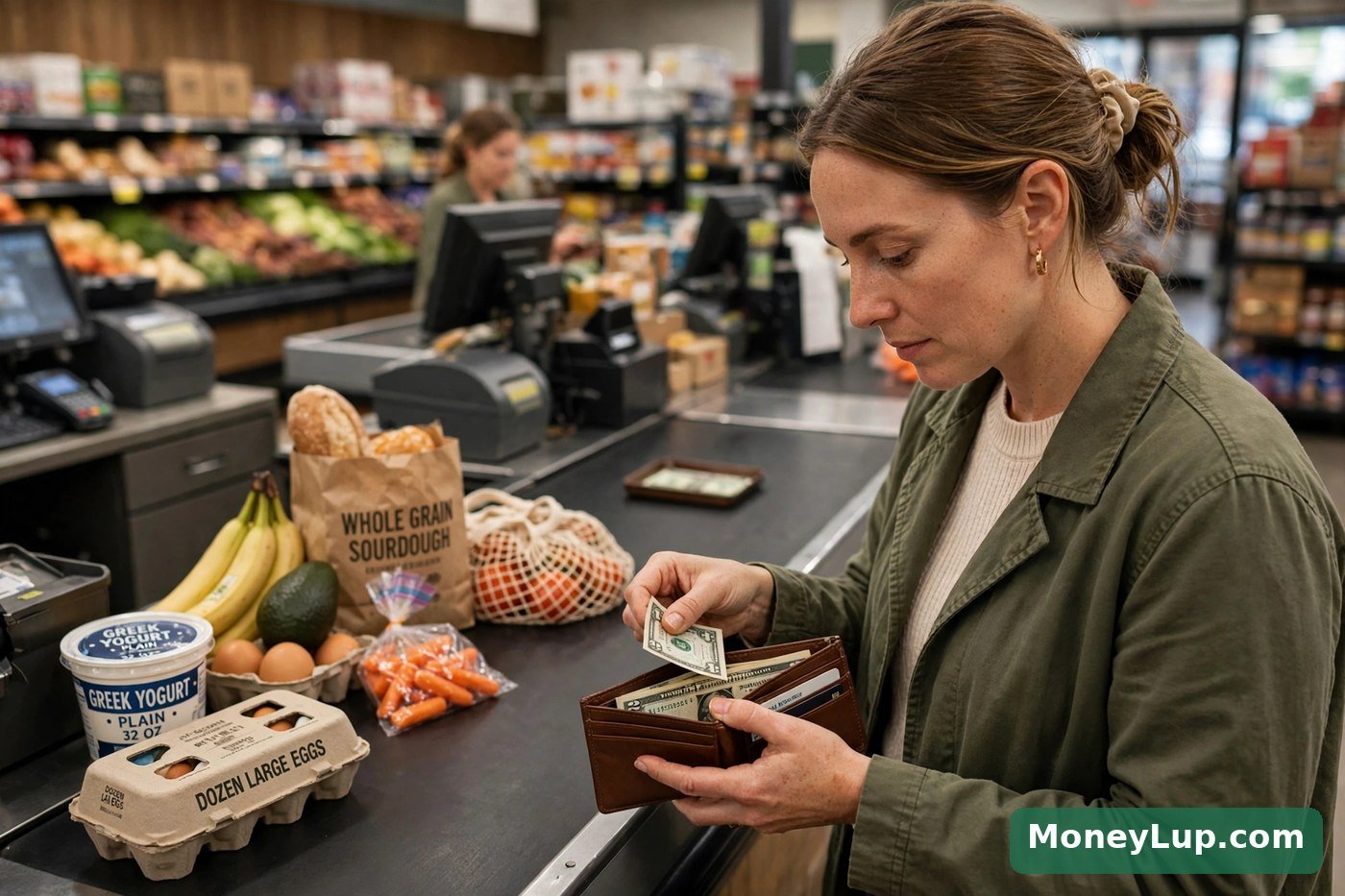
Step 4 — Spend only from the envelopes. Groceries come from the grocery envelope. When an envelope is empty, that category is done until payday — or you make a conscious swap from another envelope and accept the consequence there. The swap rule matters: borrowing silently is how the system quietly dies.
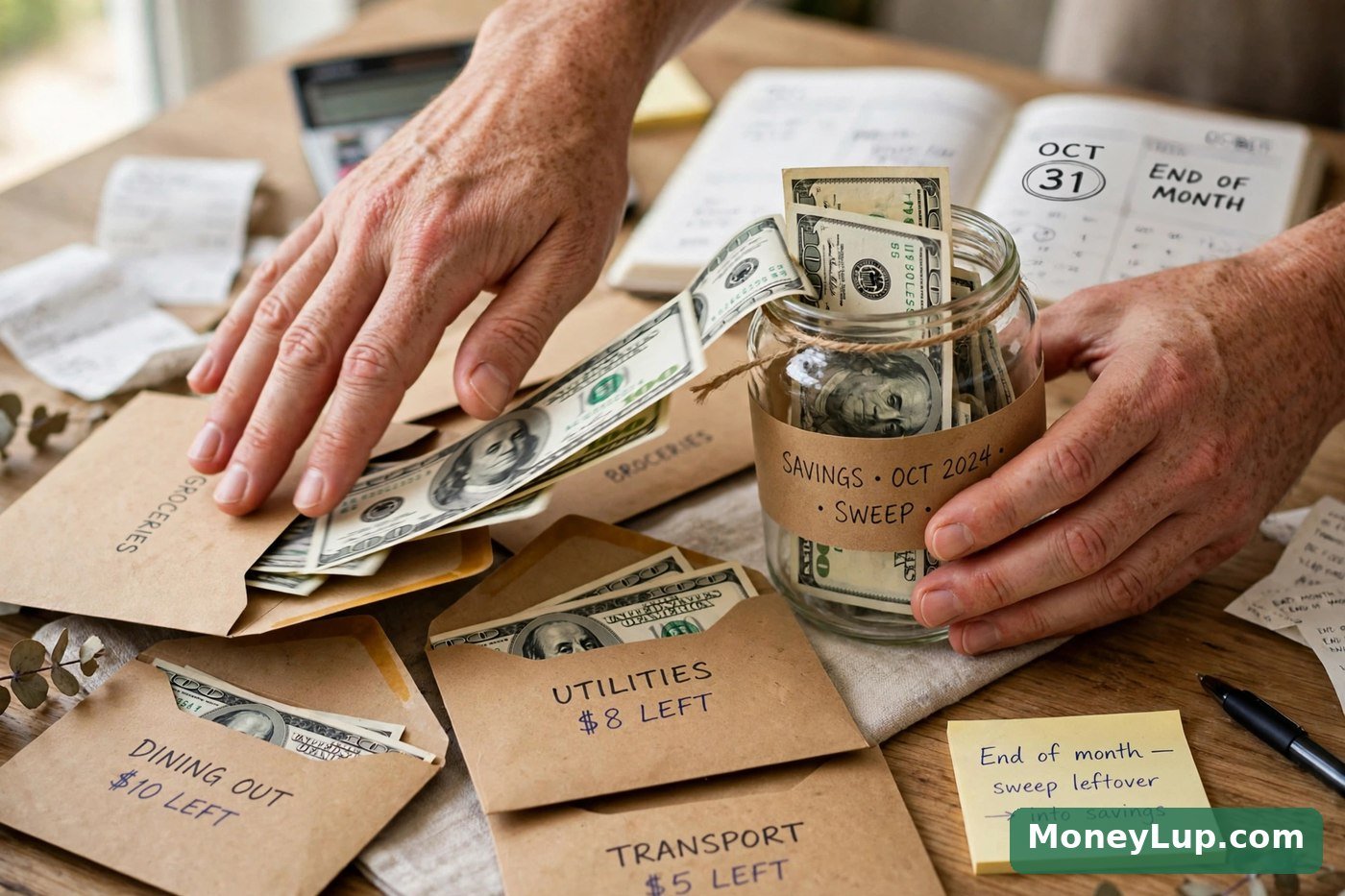
Step 5 — Sweep what’s left. Leftover cash at month’s end is your score. Roll it into next month, or sweep it into savings. Most beginners find $40–$120 a month in envelopes they used to spend without noticing.
A Worked Example: One Paycheck, Stuffed
Sara stuffs cash twice a month. Her per-paycheck envelopes:
| Envelope | Per paycheck |
|---|---|
| Groceries | $200 |
| Eating out | $60 |
| Gas | $75 |
| Fun money | $40 |
| Personal | $30 |
| Household | $25 |
| Total cash | $430 |
That’s $860 a month in cash categories, while rent, utilities, phone and her card minimums — about $1,900 — stay in the bank on autopay. In her first month, the eating-out envelope emptied on day 11 of 14. Painful, visible, and exactly the information she needed: month two, she moved $20 from personal to eating out and finished with $55 left to sweep into savings.
Add Sinking Funds When You’re Ready
Once basic envelopes feel normal (usually month two), add small monthly envelopes for irregular costs: car repairs, gifts, annual subscriptions, holidays. Saving $40 a month into a “car” envelope turns a $480 repair from a credit-card emergency into an errand. These slow, boring envelopes — sinking funds — are where cash stuffing quietly becomes genuinely powerful.

Common Beginner Mistakes
Stuffing fixed bills in cash. Rent and loan payments belong on autopay. Cash is for categories where your daily choices change the total.
Too many envelopes. Twelve categories looks organised and collapses in a week. Start with 4–6; you can split categories later.
Carrying all the cash. Take only the envelope you need for today’s errand. The rest stays home — safer, and it prevents “well, I have the money with me” spending.
No rule for online shopping. Decide in advance: either online purchases come out of an envelope the same day (cash set aside and deposited back), or one small category stays digital. No rule means the leaks just move online.
Quitting after one empty envelope. An envelope that empties early is the system working — it showed you the truth a week before your statement would. Adjust the amounts, not your commitment.
Final Words
Cash stuffing isn’t about rejecting cards or living like it’s 1975. It’s about making your most leak-prone spending visible for a few months, until the habits stick. Start with four envelopes on your next payday, amounts from real last-month numbers, and the sweep at the end. Most people don’t need to do it forever — they need to do it long enough to feel where the money actually goes.
Educational content only — not financial advice.
FAQs
Is cash stuffing safe? Yes, with one rule: don’t carry it all. Keep envelopes at home, take only what today’s spending needs, and keep the amounts modest. Many people also keep a photo of each envelope’s contents in case of loss.
What about online shopping? Give it a rule before you start: cash comes out of the matching envelope for every online order (then deposit it back to your account), or keep one clearly limited “online” category on your card. Either works — having no rule doesn’t.
How many envelopes should a beginner have? Four to six. Groceries, eating out, gas or transport, fun, and personal cover most leaks. Split or add categories only after a full month of the simple version.
Cash stuffing vs a budgeting app — which is better? They solve different problems. Apps track well; cash prevents well. If overspending is your issue, cash wins for the categories that leak. Many people end up using both: cash for spending, an app for the big picture.
Can I do cash stuffing if my income is irregular? Yes — stuff envelopes as a percentage of each payment instead of fixed amounts (for example, 20% of whatever arrives goes to groceries). The envelope limits still do their job.


One Comment